

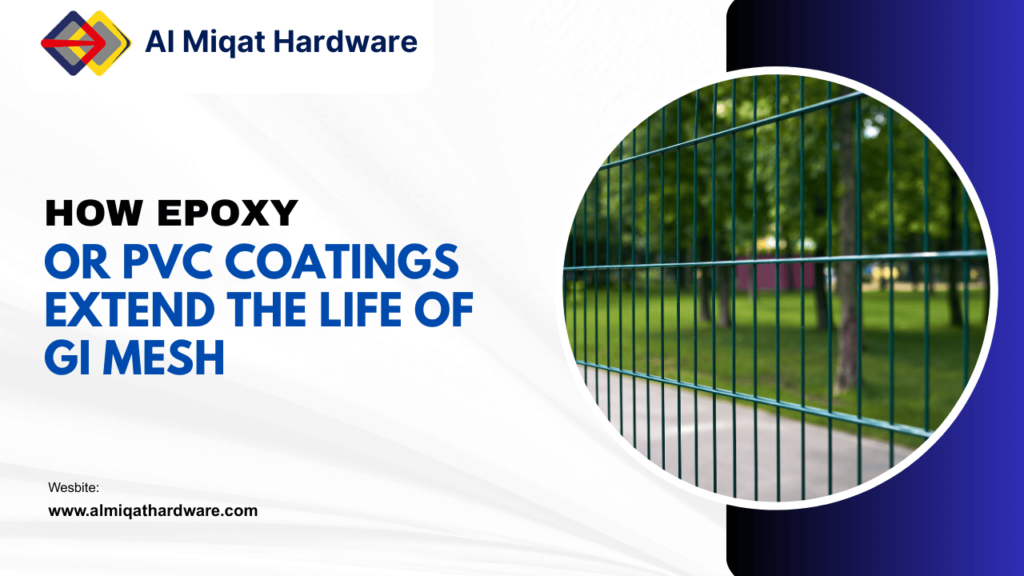
GI (Galvanized Iron) mesh is a durable and cost-effective fencing and mesh solution used in a variety of industries, from agriculture to construction. However, despite its strength and versatility, GI mesh can still be prone to corrosion and wear, especially when exposed to harsh environmental conditions like moisture, chemicals, and saltwater. This is where coatings like epoxy and PVC come into play. These coatings are designed to protect the mesh from corrosion, significantly extending its lifespan and improving its performance.
In this blog, we’ll explore how epoxy and PVC coatings help prolong the life of GI mesh, and why they are an excellent investment for projects that require long-lasting durability.
What is GI Mesh?
GI mesh is a type of mesh made from galvanized iron wires, which are coated with a layer of zinc to prevent rust and corrosion. This type of mesh is widely used in various applications, including fencing, reinforcement in concrete, security barriers, and agricultural enclosures. While galvanized iron provides some protection against corrosion, it is not immune to the elements, especially in high-moisture, coastal, or industrial environments.
The Role of Epoxy and PVC Coatings in Enhancing Durability
Epoxy and PVC coatings act as a protective layer that shields the GI mesh from external elements, ensuring it remains strong and effective for a longer period. Let’s dive deeper into how these coatings work:
Epoxy Coatings: A Robust Barrier Against Corrosion
Epoxy coatings are highly durable and provide a hard, long-lasting barrier between the GI mesh and environmental factors that may cause damage. Epoxy is a type of polymer that, when applied to the surface of GI mesh, forms a thick, protective coating that is resistant to moisture, chemicals, and extreme temperatures.
- Corrosion Resistance: The primary benefit of epoxy coatings is their ability to protect GI mesh from corrosion. Epoxy acts as a physical barrier, preventing water and moisture from reaching the metal surface. This is especially important in coastal and industrial areas where saltwater and harsh chemicals are common.
- Chemical Resistance: Epoxy coatings offer resistance to a wide range of chemicals, including acids, alkalis, and solvents. This makes GI mesh coated with epoxy ideal for use in environments where the mesh may come into contact with corrosive substances, such as in factories, chemical plants, and agricultural settings.
- Enhanced Strength: Epoxy coatings provide an additional layer of protection that can help prevent physical damage from abrasion and impact. This makes the mesh more resilient in high-traffic areas or environments where it may be subject to wear and tear.
PVC Coatings: Flexibility and Longevity
PVC (Polyvinyl Chloride) coatings are another popular option for extending the life of GI mesh. PVC is a plastic polymer that is applied to the surface of the mesh, creating a flexible, durable, and corrosion-resistant layer. The key benefits of PVC coatings include:
- Superior Corrosion Protection: Like epoxy, PVC coatings protect the GI mesh from rust and corrosion, particularly in areas exposed to moisture and saltwater. PVC’s resistance to water and chemicals makes it ideal for use in marine environments, agricultural fencing, and security barriers.
- UV Protection: PVC coatings also offer protection against UV rays, which can cause damage to uncoated metal surfaces over time. This makes PVC-coated GI mesh ideal for outdoor applications, where prolonged exposure to sunlight is common.
- Aesthetic Appeal: PVC coatings are available in a variety of colors, allowing for a more aesthetically pleasing appearance. This makes PVC-coated GI mesh a great option for projects where both function and appearance are important.
- Flexibility and Durability: PVC coatings are flexible and can withstand impacts and bending without cracking or peeling. This flexibility makes PVC-coated GI mesh suitable for use in areas that require a high degree of flexibility, such as in agricultural fences and construction sites.
How Epoxy and PVC Coatings Work Together to Extend the Life of GI Mesh
Both epoxy and PVC coatings provide a level of protection that galvanization alone cannot offer. While galvanization protects against rust by providing a zinc coating, it may not fully protect against more aggressive environmental factors like saltwater, industrial chemicals, or extreme weather conditions.
- Longer Lifespan: When GI mesh is coated with epoxy or PVC, the mesh can last much longer compared to uncoated or merely galvanized mesh. The coating prevents the mesh from succumbing to corrosion, reducing the need for repairs or replacements.
- Enhanced Resistance to Physical Damage: Both coatings offer resistance to scratches, dents, and other forms of physical damage. This increases the overall durability of the mesh, making it suitable for use in areas that experience high levels of wear and tear.
- Lower Maintenance Costs: The protective coatings reduce the need for regular maintenance, such as rust treatment or painting, saving time and money over the life of the mesh.
Applications of Epoxy and PVC Coated GI Mesh
Epoxy and PVC-coated GI mesh are used in a wide variety of industries, thanks to their enhanced protection and durability. Some common applications include:
Agriculture:
- Fencing for farms and livestock enclosures
- Crop protection and field boundaries
- Irrigation systems and drainage
Construction:
- Reinforcement in concrete structures
- Safety barriers on construction sites
- Scaffoldings and temporary fencing
Security:
- High-security fencing for industrial sites and prisons
- Perimeter barriers for government buildings and military facilities
- Wildlife enclosures and animal control barriers
Marine and Coastal Areas:
- Coastal fencing and barriers
- Marine installations exposed to saltwater
- Harbor and dock enclosures
Why Choose Epoxy or PVC Coatings for GI Mesh?
- Cost-Effectiveness: While epoxy and PVC coatings may increase the initial cost of GI mesh, the long-term benefits far outweigh the upfront investment. The coatings significantly extend the lifespan of the mesh, reducing maintenance and replacement costs.
- High-Performance Protection: Both coatings offer enhanced protection against a wide range of environmental factors, making them ideal for use in harsh conditions.
- Versatility: The combination of durability, aesthetic appeal, and flexibility makes epoxy and PVC-coated GI mesh suitable for a variety of applications across different industries.
Conclusion
Epoxy and PVC coatings are essential for extending the life of GI mesh, providing critical protection against corrosion, physical damage, and harsh environmental conditions. Whether you are working in agriculture, construction, security, or marine environments, these coatings enhance the mesh’s durability, performance, and longevity, making them a smart investment for any project.
At Al Miqa Hardware, we offer high-quality epoxy and PVC-coated GI mesh designed to withstand the toughest conditions. Visit www.almiqathardware.com to explore our full range of mesh solutions and find the ideal option for your needs.