

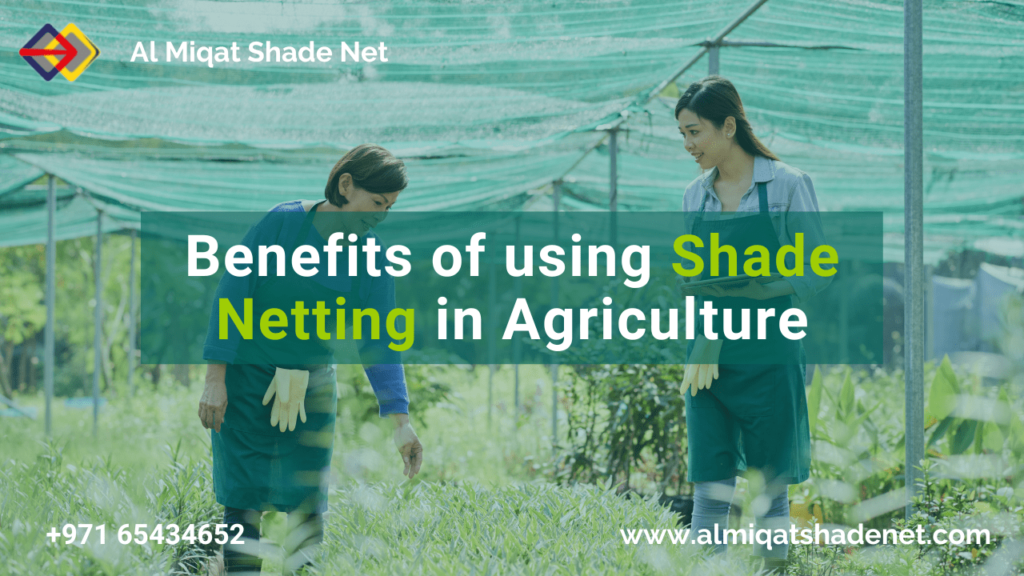
In short: An agriculture shade net is a knitted HDPE mesh that reduces sunlight and heat over crops, nurseries and greenhouses. In the UAE, the right net cuts heat stress, lowers water use and protects yield — using roughly 30–50% shade for vegetables, 50–75% for nurseries, and 40–60% for greenhouses. The key is matching shade percentage to the crop while choosing UV-stabilised, durable material for Gulf conditions.
Why do UAE farms use shade netting?
A correctly specified agriculture shade net delivers several gains together:
- Lower heat stress — keeps leaf and soil temperatures in a workable range.
- Water savings — less evaporation means lower irrigation demand, a major advantage in the UAE.
- UV and sun-scald protection — prevents leaf burn and fruit damage.
- Weather protection — shields against sandstorms, hail and excessive light.
- Higher, more consistent yield — healthier plants produce more reliably.
- Pest reduction — finer nets help limit some pest access (paired with proper insect netting where needed).
Shade nets for greenhouses and ventilation
In greenhouses, shade netting controls the light and heat entering the structure so the interior doesn’t overheat — critical in Gulf summers. It works best alongside good ventilation: shade reduces the heat load while airflow removes the heat that does build up. Combining the two keeps greenhouse temperatures stable, protects crops, and cuts the energy needed for active cooling. Many UAE growers report meaningful energy and water savings once a correctly specified shade net is in place over or within the greenhouse.
Nurseries, floriculture and livestock
Shade netting isn’t only for field crops:
- Nurseries: young plants and seedlings need protection while they establish — 50–75% shade is typical.
- Floriculture: flowers are sensitive to light and heat; the right shade percentage protects bloom quality and timing.
- Livestock: shade nets over pens and yards reduce heat stress on animals in hot climates, supporting welfare and productivity.
Which shade net material is best for UAE agriculture?
Choose UV-stabilised HDPE (high-density polyethylene). Natural or untreated materials degrade quickly in Gulf sun, while UV-treated HDPE resists breakdown and lasts for years. Pay attention to GSM (fabric weight) too — a heavier net is more durable and holds tension better over large spans. For demanding, large-area installations, see our commercial-grade knitted shade net.
How long does an agriculture shade net last?
A quality, UV-stabilised HDPE shade net that’s correctly installed and tensioned typically lasts several years in UAE conditions, while a cheap, untreated net can become brittle within a single season. Material quality (UV treatment and GSM) and proper installation are the main factors that determine lifespan.
Get the right net for your farm
The right agriculture shade net depends on your crop, location and structure. Tell us what you’re growing and the area to cover, and we’ll recommend the exact shade percentage, GSM and net type. Request a quote or message us on WhatsApp.
Frequently Asked Questions
What percentage shade net is best for vegetables?
Most leafy vegetables grow well under 30–50% shade — enough to cut heat stress while keeping the light plants need.
Do shade nets save water?
Yes. By reducing evaporation and heat, shade nets lower irrigation demand, which is a significant benefit in the UAE.
Can shade nets be used over greenhouses?
Yes — shade nets reduce the heat and light load on greenhouses and work best combined with good ventilation.
What is the best shade net material for farming in the UAE?
UV-stabilised HDPE, with a GSM suited to your span — it resists Gulf sun and lasts far longer than untreated material.