

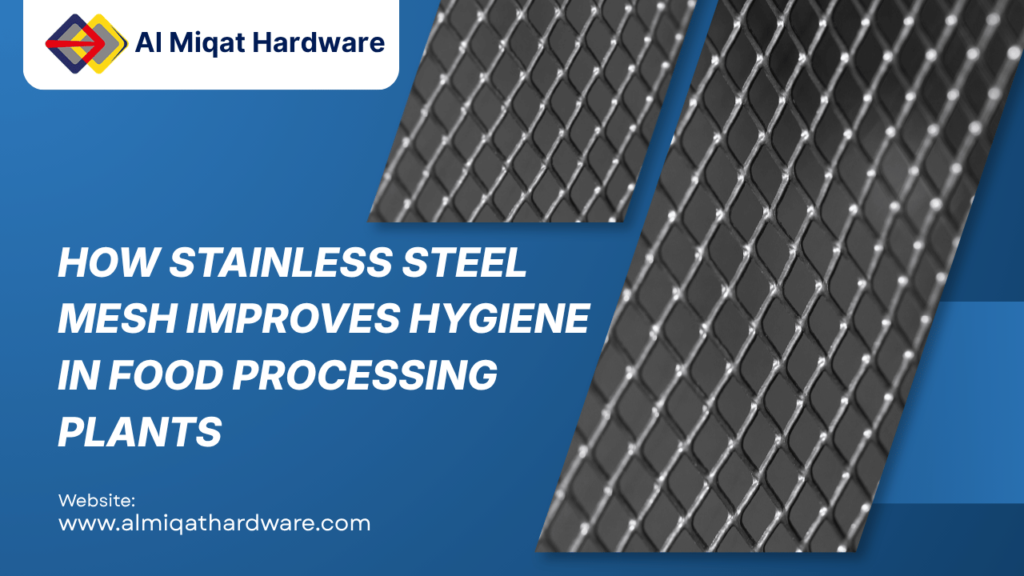
Hygiene is one of the most critical factors in the food processing industry. From manufacturing and packaging to storage and transportation, every stage of food production requires strict cleanliness standards to ensure product safety and regulatory compliance. Even small contamination risks can lead to serious health concerns, operational losses, and damage to a company’s reputation.
To maintain hygienic environments, food processing facilities rely on durable and sanitary materials that can withstand continuous cleaning, moisture exposure, and demanding operating conditions. Among the many materials used in modern food processing plants, stainless steel mesh has become one of the most trusted solutions for maintaining cleanliness, safety, and efficiency.
At Al Miqat Hardware, we provide high-quality stainless steel mesh solutions designed to meet the hygiene and durability requirements of industrial and food-grade applications.
Why Hygiene Matters in Food Processing
Food processing plants operate under strict hygiene regulations because contamination can occur through bacteria, dust, pests, chemicals, or improper handling. Maintaining clean production environments is essential not only for consumer safety but also for meeting industry standards and avoiding costly product recalls.
Every material used inside a food processing facility must support easy cleaning, resist contamination, and maintain structural integrity under constant exposure to moisture, chemicals, and temperature variations.
This is where stainless steel mesh offers significant advantages over conventional materials.
Corrosion Resistance for Clean Environments
One of the main reasons stainless steel mesh is widely used in food processing plants is its exceptional resistance to corrosion. Food production environments often involve water, steam, cleaning chemicals, oils, and acidic substances that can quickly damage ordinary metal materials.
Stainless steel naturally resists rust and corrosion, making it ideal for hygienic environments where cleanliness and durability are essential. Unlike untreated metal surfaces that may deteriorate over time, stainless steel mesh maintains its quality even under continuous washing and sanitization procedures.
This corrosion resistance helps prevent contamination caused by rust particles or material degradation.
Easy to Clean and Maintain
Food processing equipment and surfaces require regular cleaning to eliminate bacteria and maintain sanitary conditions. Stainless steel mesh features a smooth, non-porous surface that does not easily trap dirt, grease, or microorganisms.
Because of its open structure and easy-to-clean surface, stainless steel mesh can be washed, disinfected, and maintained with minimal effort. This helps reduce cleaning time while supporting efficient hygiene management within the facility.
Its ability to withstand high-pressure cleaning and industrial-grade sanitizing agents makes it highly suitable for demanding food production environments.
Preventing Bacterial Growth
Hygienic materials should minimize the risk of bacterial growth and contamination. Stainless steel is known for its hygienic properties because its smooth surface limits the accumulation of moisture and food particles that can support bacteria.
Unlike some materials that may crack, peel, or absorb contaminants over time, stainless steel mesh remains stable and resistant to surface damage. This reduces hidden contamination risks and supports safer food handling practices.
For food processing facilities focused on maintaining high sanitation standards, stainless steel mesh provides an added layer of protection against hygiene-related issues.
Excellent Strength and Durability
Food processing operations often involve heavy machinery, continuous movement, and demanding production schedules. Materials used within these facilities must be durable enough to handle daily wear and tear without compromising hygiene or performance.
Stainless steel mesh combines strength with flexibility, making it suitable for filtration systems, conveyor protection, ventilation covers, partitions, storage enclosures, and processing equipment.
Its long lifespan also reduces the need for frequent replacements, helping facilities lower maintenance costs while maintaining operational efficiency.
Resistance to Heat and Chemicals
Many food production processes involve high temperatures, steam exposure, and chemical cleaning procedures. Stainless steel mesh performs exceptionally well under these conditions because it maintains its structural stability even when exposed to heat and aggressive cleaning agents.
This makes it suitable for bakeries, meat processing plants, seafood facilities, beverage production units, dairy operations, and commercial kitchens where temperature control and sanitation are critical.
Its resistance to chemical reactions also helps preserve food quality and prevent contamination during production processes.
Improved Airflow and Ventilation
Proper airflow is essential in food processing plants to maintain temperature control, reduce moisture buildup, and improve overall hygiene conditions. Stainless steel mesh allows efficient air circulation while still providing protection against pests and external contaminants.
It is commonly used in ventilation systems, air filters, machine guards, and protective barriers where both hygiene and airflow management are important.
Better airflow contributes to a cleaner and safer production environment for both products and employees.
Supporting Industry Compliance Standards
Food processing facilities must comply with strict hygiene and safety regulations established by local and international authorities. Stainless steel mesh supports compliance because it is widely recognized as a food-safe material suitable for hygienic industrial applications.
Its durability, cleanability, and resistance to contamination help businesses maintain the standards required for safe food production and quality assurance.
Using reliable food-grade materials also demonstrates a company’s commitment to safety, professionalism, and operational excellence.
Conclusion
Maintaining hygiene in food processing plants requires more than regular cleaning — it depends on using the right materials that support cleanliness, durability, and contamination prevention. Stainless steel mesh has become an essential solution in the food industry because of its corrosion resistance, hygienic properties, easy maintenance, and long-term durability.
From ventilation systems and filtration units to protective barriers and equipment support, stainless steel mesh helps create safer and more efficient food production environments.
At Al Miqat Hardware, we provide high-quality stainless steel mesh solutions tailored for industrial and food-grade applications across the UAE. Our products are designed to deliver reliable performance while meeting the highest standards of hygiene, safety, and durability.